


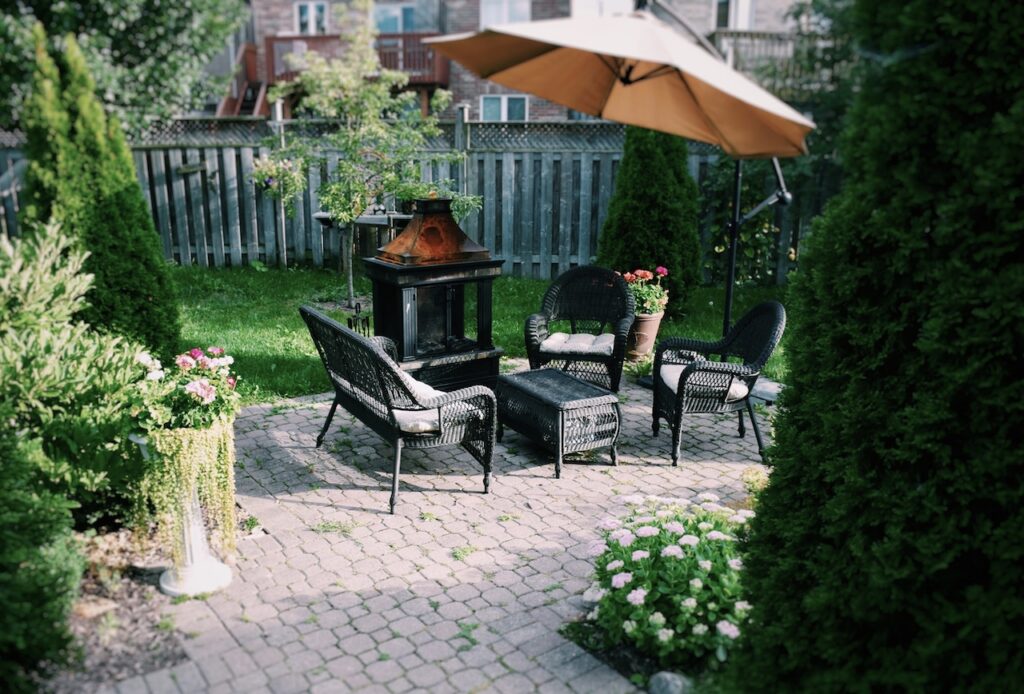
If your concrete slab is still sound and reliable, you might only need a resurface instead of a full patio replacement.
Your patio is old, and you want a complete redesign. Do you need to replace the whole thing? A tired patio doesn’t automatically mean demolition. Sometimes the concrete slab underneath is perfectly fine, and only the surface needs replacing—which is good news for your wallet and your weekend.
But how do you tell the difference? These six questions will help you figure out which category your patio falls into, so you can plan the right fix and outdoor patio idea instead of throwing money at the wrong thing.
Quick Definitions Before You Decide
Before you start dreaming up outdoor patio ideas, it helps to know what each option actually means:
- Resurfacing: Overlays, micro-topping, stamped concrete, stain and seal, or pavers laid over the existing slab
- Replacement: Demolition and removal, a new base and drainage, then a fresh slab, paver, or stone surface
Why does the difference matter? Because resurfacing is only as good as what’s beneath it. A beautiful new surface over a failing slab is just a good-looking problem waiting to return.
Question 1: What Kind of Cracking Are You Dealing With?
In North Texas, expansive clay soils swell and shrink with the seasons, which makes them a common culprit behind patio damage.
Hairline and Surface Cracking
This includes shrinkage cracks and spalling (flaking on the surface), which are typically cosmetic. These cracks are a great candidate for an overlay or stamped resurfacing.
Structural Cracking
This includes wide, growing cracks with one side sitting higher than the other, or cracks that keep coming back in the same spot after past repairs. Both signal a base or soil problem, so resurfacing will telegraph the crack right back through. You’ll definitely need a full replacement before you start on any other outdoor patio ideas if you have this kind of cracking.
Question 2: Is the Slab Level, or Is It Moving?
A patio that’s shifting needs more than a fresh face. Here are the signs of settlement to watch for:
- Sections that have dropped, tilted, or pulled away from the house
- Doors and thresholds that no longer clear the patio
- Standing water that never used to pool there
If the slab is actively moving, a new surface won’t stop it. There are middle-ground options, though, if you don’t want a full replacement, like mudjacking or polyurethane lifting to level the slab before resurfacing.
Question 3: Where Does the Water Go?
Drainage is the number one reason patios fail early. Here’s what to look for:
- Water draining toward the house instead of away from it
- Pooling after every rain, or lingering damp spots and algae
- Erosion or washout along the patio edges
Resurfacing won’t change the slope in any meaningful way. Replacement, on the other hand, lets you rebuild the base, re-grade the surface, and add any drains you need.
Question 4: How Much Do You Want the Layout to Change?
Planning a kitchen or a cover as part of your outdoor patio idea? Coordinate that work with your patio decision. Utilities and footings are much cheaper to run once, while everything is already torn up.
Keeping the Same Footprint
Resurfacing can transform the look without touching the shape. Stamped, stained, or paver overlays offer real design range, which opens the door to plenty of small patio ideas that feel brand new.
Changing the Footprint
Replacement makes sense when you want to expand for a dining zone, add a seating area, or fit an outdoor kitchen. It also lets you add a patio cover or arbor with footings tied into the slab, and rework traffic flow between the house, pool, and cook space.
Question 5: What’s Your Budget and Timeline?
Money and time might be your biggest priority. Here’s the quick comparison:
- Resurfacing: Lower cost, shorter project, less disruption to the yard
- Replacement: Higher cost, demolition and haul-off, plus longer cure and completion time
Watch out for the false economy: resurfacing a failing slab means you’ll likely pay twice within a few years. If the full project is more than this season allows, ask about financing and phasing options to spread the work out.
Question 6: How Long Do You Plan to Stay?
Your timeline in the home matters as much as your patio’s condition.
- Short-Term or Selling Soon: Resurfacing is a cost-effective way to boost curb appeal and make your outdoor space look attractive for potential buyers without spending too much.
- Long-Term Home: Replacement is worth it when the patio is the foundation of a long-term plan. Building it right once supports covers, kitchens, fire features, and lighting you add later.
Scoring Your Answers
It’s time to add up where your patio landed:
- Mostly cosmetic issues, a sound and level slab, same footprint? Resurface
- Structural cracks, settlement, drainage problems, or a bigger footprint? Replace
- A mix of both? Get a professional evaluation before spending anything
An in-person assessment is the best way to dig deeper. A professional can check slab thickness, base condition, existing drainage, and your yard’s history of soil movement to give you a clear picture of what either option will look like.
What Both Projects Should Include in North Texas
Whether you resurface or replace, make sure you remember the right details to make your outdoor patio ideas last through Texas weather:
- Materials rated for intense sun, heat, and seasonal storms
- Slip resistance around pool decks and other wet areas
- Expansion and control joints placed for clay soil movement
- Shade from a patio cover or arbor to cut surface heat and stretch your usable season
Frequently Asked Questions
Q: Can you resurface a cracked concrete patio?
A: Hairline and surface cracks, yes. Structural cracks, no, since they’ll reappear across the new surface.
Q: How long does resurfaced concrete last?
A: Installed properly over a sound slab, it can last many years. The catch is that the slab’s condition sets the ceiling, so a weak base shortens the lifespan no matter how nice the surface looks.
Q: Is it cheaper to resurface or replace a patio?
A: Resurfacing costs less upfront. Replacement can be cheaper in the long run if the slab has real problems, since you won’t be paying to fix it multiple times.
Q: Can you lay pavers over an existing concrete patio?
A: Usually, yes, if the slab is stable and drains properly. You’ll also need to account for height changes at doors and thresholds so nothing catches.
Ready to Make the Call? Reach Out to Outdoor Living Pool & Patio
Whether you’re weighing simple small patio ideas or planning a full backyard transformation, the team at Outdoor Living Pool & Patio can assess your slab and help you invest in the fix that lasts. Reach out for a free consultation, and let’s build something you’ll love.
