


Bugs on the water surface are one of the most common complaints for North Texas pool owners. The fix usually comes down to two things: consistent maintenance that removes what attracts bugs, and smart landscaping and design changes that address the root cause.
Ever wonder why your pool seems to attract every bug in the neighborhood? Bugs are drawn in by standing water, algae, debris, lights, and the plants and soil right next to your backyard. And if you’re in North Texas, the heat and humidity make things even worse, keeping bugs active well into fall.
In this guide, we’ll break down why different swimming pool bug types love your pool, the simple maintenance habits that’ll send them packing, and the longer-term fixes that actually make a difference.
Why Bugs Are Attracted to Your Pool in the First Place
Still or slow-moving water is basically a bug’s dream home. Even a pool that looks perfectly clean can become a breeding ground if your pump isn’t running long enough each day. On top of that, leaves, pollen, grass clippings, and algae are all food sources for water-dwelling insects. The more buildup you’ve got on the surface and walls, the more bugs you’re inviting to the party. Even bright lights can invite moths, June bugs, and every other night flier in the neighborhood.
A pool cover can help keep all those pesky critters out, but it’s not a foolproof solution. Plus, who wants to swim in a pool with a cover on all the time? The best way to prevent bugs from taking over your pool is by regular maintenance and cleaning.
Swimming Pool Bugs: Types You’re Most Likely to See
Most North Texas pool owners deal with the same handful of swimming pool bug types. Here’s what to look for and what each one signals.
Mosquitoes and Mosquito Larvae
Mosquitoes lay eggs directly in still or stagnant water. If your pump runs only a few hours a day, or you have a low spot in the yard that stays wet after rain, you’re giving them exactly what they need.
Water Boatmen and Backswimmers
These small, oval-shaped swimming pool bug types swim just below the surface. Water boatmen eat algae; backswimmers hunt the water boatmen. If you’re seeing either one, it’s a sign your algae levels are creeping up, even if the water still looks clear.
June Bugs, Moths, and Other Night Fliers
These insects are drawn to bright lights near the water. They fall in, sink, and become organic debris that feeds other bugs and contributes to water chemistry problems.
Wasps and Bees Looking for a Water Source
Wasps and bees need water, especially in Texas summers. A pool gives them a reliable source. Consistent foot traffic and movement near the water helps discourage them from treating your pool as their personal watering hole.
Ants and Spiders Around the Deck and Coping
Ants follow moisture and food trails. Spiders follow the bugs that are already there. If you’re seeing them along the coping (the tile or stone edge around the pool), the deck is likely holding moisture, debris, or both.
Water Chemistry: The First Line of Defense
Clean, balanced water is far less appealing to swimming pool bug types than water that’s slipping out of range. Getting your chemistry right is the single most effective thing you can do.
- Keep chlorine and pH in proper range: Chlorine should stay between 1–3 ppm (parts per million), and pH between 7.4–7.6. Outside those ranges, algae and bacteria grow faster, and that feeds insects.
- Algae control matters more than bug control: Algae is the underlying food source for many pool bugs. Treat algae directly with algaecide and brushing, not just by chasing the insects themselves.
- Shock after heavy rain or heavy use: Rain dilutes chlorine and introduces organic material. Heavy swim days do the same. A shock treatment keeps things from getting out of hand.
- Test consistently through peak season: Test your water two to three times per week from May through September. Catching a problem early is much easier than correcting a full algae bloom.
Circulation and Filtration Fixes
Moving water doesn’t breed mosquitoes. Still water does. Circulation is one of the easiest problems to fix.
- Run the pump long enough each day: Most pools need eight to twelve hours of pump run time per day during summer. Split it into two cycles if needed, one in the morning, one in the evening.
- Clean skimmer baskets, pump baskets, and the filter regularly: A clogged basket or dirty filter reduces flow and creates dead spots where debris collects, and algae begins.
- Check returns and jets for dead spots: If one corner of the pool always has floating debris, a return jet may be pointed the wrong direction.
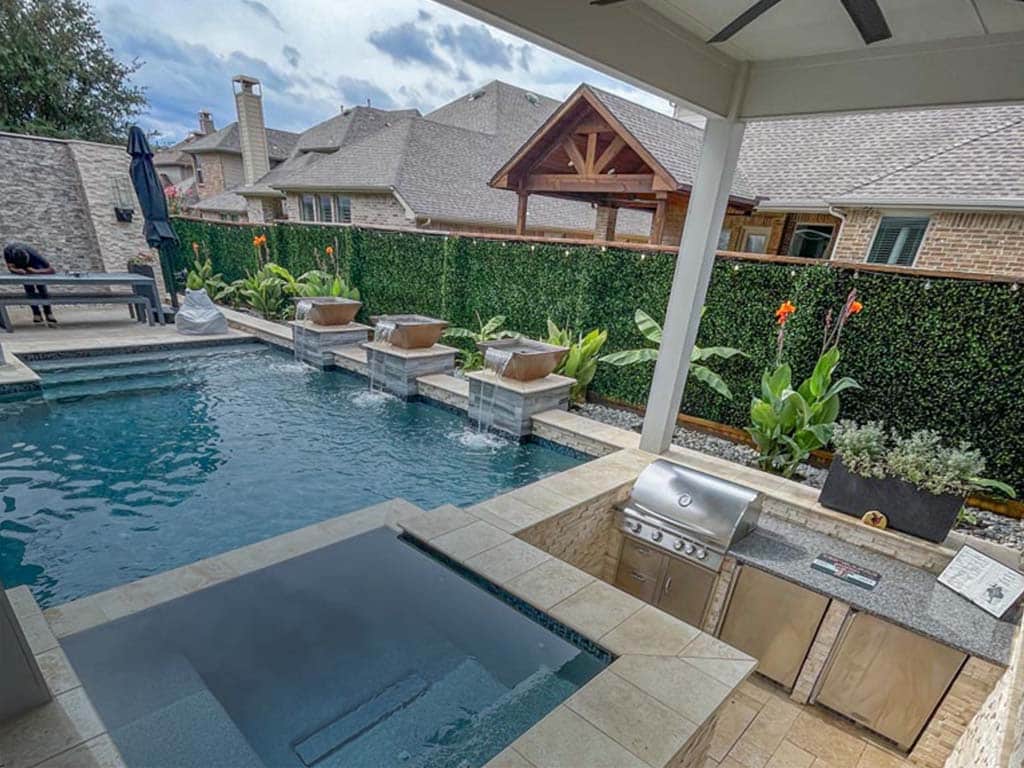
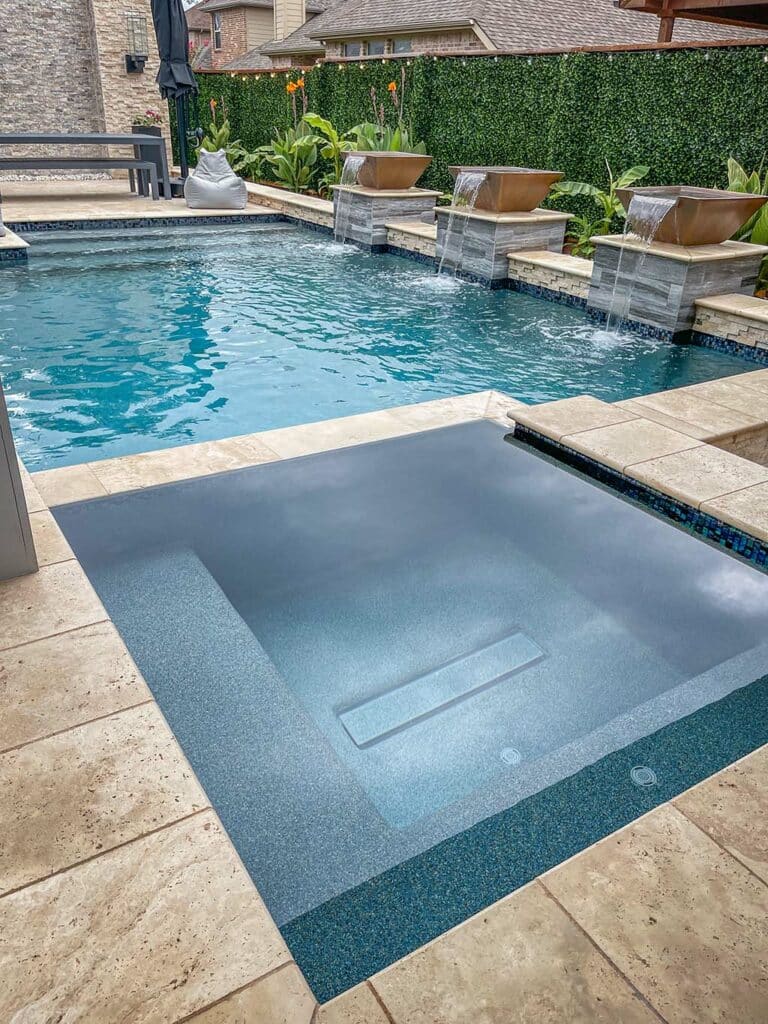
- Add a water feature if you have dead zones: Fountains, bubblers, and waterfalls keep the surface moving in areas the pump doesn’t reach well.
Routine Maintenance Habits That Make a Difference
Small, consistent habits prevent the buildup that attracts swimming pool bug types in the first place.
- Skim the surface daily: Leaves, pollen, and dead insects start to break down quickly in summer heat. Daily skimming prevents them from sinking and decomposing.
- Brush walls and steps weekly: Algae clings to surfaces before it becomes visible. Brushing disrupts it before it takes hold.
- Vacuum settled organic matter: Fine debris settles to the floor and feeds algae. Vacuum at least once a week during peak season.
- Rinse the deck and coping: Dirt, bird droppings, and organic material on the deck get washed into the pool or attract insects on their own.
- Empty anything that holds water: Buckets, pool toys, planters, and folded-up covers can hold enough water to breed mosquitoes within a few days.
Lighting Changes That Reduce Night Swarms
Bright white lights near water are basically an invitation for flying insects. A few simple changes can cut down dramatically on what shows up after dark.
- Switch to warmer color temperature LEDs: Bulbs labeled “warm white” (2700K–3000K) attract significantly fewer insects than cool white or daylight bulbs.
- Move light sources away from the water’s edge: Light over the pool is unavoidable, but path lights and wall-mounted fixtures placed farther back keep the swarm away from the water.
- Use downlighting instead of bright overhead fixtures: Downlights and ground-level path lights are less visible to insects flying at height.
- Put lights on timers: Turn off or dim pool lights after 10 or 11 PM when insect activity peaks.
Landscaping Fixes That Solve the Root Problem
The plants and soil closest to your pool have more impact on bug activity than most homeowners realize.
- Choose low-litter plants: Heavy bloomers and trees that drop leaves, seeds, or bark create constant debris near the water. Ornamental grasses and compact shrubs are easier to manage.
- Rethink mulch beds close to the pool: Wet mulch is habitat for ants, earwigs, and moisture-loving swimming pool bugs. Consider decomposed granite or river rock within five to ten feet of the water.
- Plant insect-deterring species nearby: Rosemary, lavender, and lemongrass naturally repel mosquitoes and flies. They’re also low maintenance and well-suited to North Texas summers.
- Trim overhanging branches: Branches over the pool drop debris directly into the water and shelter insects from sun and wind.
Drainage and Grading Problems to Address
Poor drainage keeps soil wet long after it should have dried out, and wet soil around a pool is a magnet for all swimming pool bug types.
- Fix low spots that hold water after rain or irrigation: Even a shallow puddle that persists for two or three days is enough for mosquitoes to breed.
- Reduce overwatering near the pool: Grass and beds within ten feet of the pool don’t need as much water as areas farther away. Dial back irrigation timers for those zones.
- Redirect sprinkler heads spraying toward the pool: Water hitting the coping or deck keeps things wet and can throw off pool chemistry.
- Correct deck drainage and runoff paths: If water pools on the deck after rain, it may be a grading issue. Re-sloping the deck or adding a channel drain keeps water moving away from the pool.
Hardscape and Design Solutions
The physical layout of your backyard affects how many insects reach the water. A few design choices create natural barriers.
- Widen the hardscape buffer between plants and water: A wider deck or patio creates distance between soil and the pool edge, reducing the number of insects that make it into the water.
- Add a screened structure, arbor, or patio cover: These create a protected zone for seating and reduce how much open sky insects can approach from.
- Install outdoor fans on covered patios: Moving air makes it hard for mosquitoes and flies to land.
- Use an automatic pool cover when the pool isn’t in use: A cover blocks debris, limits evaporation, and removes the standing water signal that draws insects in.
When It’s Time to Call a Professional
Some swimming pool bug problems are symptoms of bigger issues that DIY maintenance can’t fix. If any of the following sound familiar, it’s worth getting a professional assessment:
- Recurring algae that comes back within days of treatment, despite consistent maintenance
- A pump or filter that can’t keep up with the pool’s volume, leading to circulation dead spots no matter how long you run it
- Persistent drainage problems around the deck that don’t improve after adjusting irrigation
- A backyard layout that keeps soil, mulch, or moisture-holding plants too close to the water, requiring a landscape redesign to fix properly
These aren’t just inconveniences. Left unaddressed, they make every other effort less effective.
Let Outdoor Living Pool & Patio Help You Get Ahead of It
Keeping swimming pool bug types out of your pool is much easier when the pool itself is running the way it should. If you’re dealing with recurring algae, circulation problems, or a backyard that just isn’t set up to stay clean, the team at Outdoor Living Pool & Patio can help.
Outdoor Living Pool & Patio serves the DFW area with full-service pool repair, equipment service, landscape design, and hardscape solutions. Whether you need a filter cleaned, a drainage issue corrected, or a full backyard redesign, their experienced technicians are ready to help. Call (972) 317-3500 or request a free estimate online to get started!
