


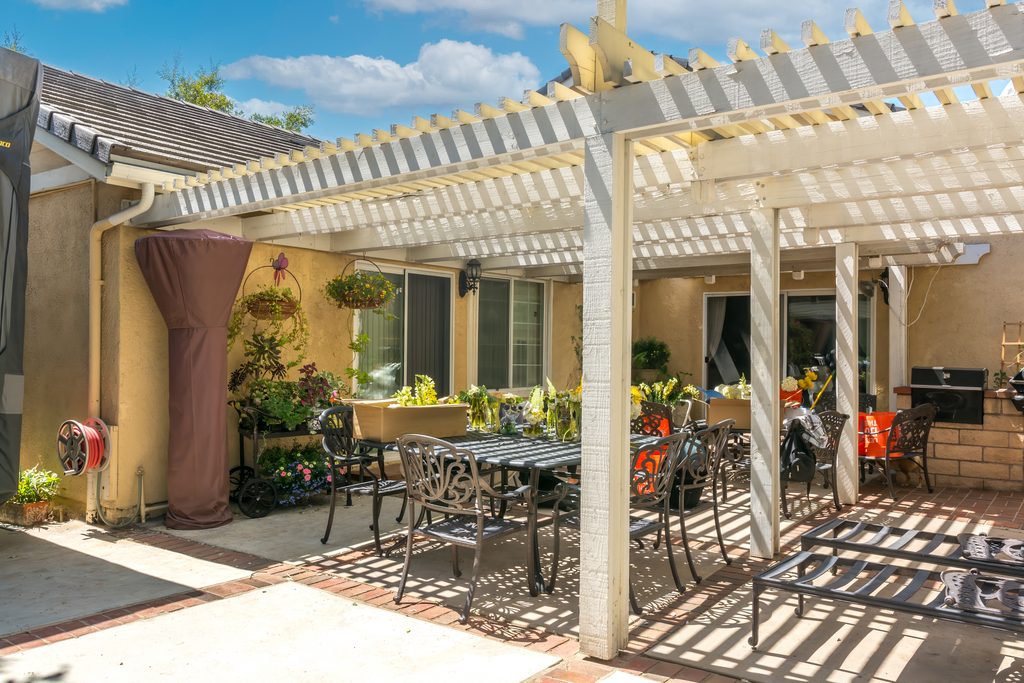
Attached patio covers connect directly to your home and work best for small yards or daily shade near the kitchen. Freestanding patio covers stand on their own and give you the freedom to shade a pool, outdoor kitchen, or any spot in the yard.
Your patio cover shapes how your backyard looks, feels, and gets used every day. Will it become an extension of your living room, or a destination spot across the yard? Neither option wins every time. You’ll need to take a look at your home’s layout, your yard, and how your family likes to spend time outside.
This guide breaks down the differences between attached vs. freestanding patio covers, including the pros, cons, and what North Texas homeowners should keep in mind before building.
Each Type Of Patio Cover
An attached patio cover connects directly to your home, usually at the roofline or exterior wall. It extends your living space straight out from the back door, creating a natural flow between indoors and out.
A freestanding patio cover stands on its own posts and footings, completely separate from your house. This independence means it can go anywhere in the yard, including a poolside or a quiet coffee corner.
Attached Patio Covers: Pros And Cons
Attached patio covers are a popular choice because they feel like a natural extension of the home. They also tend to cost less since part of the structure is already supported by your house.
Advantages
- Seamless indoor-to-outdoor flow with shade right outside the door
- Can be designed to match the home’s roofline, materials, and architecture
- Often more cost-effective because the home provides part of the support
Considerations
- Roof tie-ins must be done correctly to protect against leaks and drainage issues
- Placement is limited to the side of the home it connects to
- Height may be limited by existing eaves and rooflines
- Can reduce natural light entering nearby rooms
Freestanding Patio Covers: Pros And Cons
Freestanding patio covers offer more flexibility since they aren’t tied to your home’s structure. This makes them a great option for shading a specific feature.
Advantages
- Flexibility to place shade exactly where it is needed, such as beside a pool or near an outdoor kitchen
- Creates a destination “room” in the yard for entertaining or relaxing
- No changes to the home’s roof or exterior
- More design freedom in height, shape, and style
Considerations
- Requires additional posts and footings, which can affect cost
- Electrical for fans, lighting, or TVs may need to be run farther from the home
- Guests walk outside to reach it, which matters during rain or extreme heat
- City setbacks and easements may limit placement
What North Texas Homeowners Should Consider
Local climate and soil conditions play a big role in choosing between attached vs. freestanding patio covers.
- Sun Orientation: West-facing patios take the brunt of afternoon heat, making coverage placement critical.
- Soil and Foundations: Expansive clay soil requires properly engineered footings for both types.
- Weather: Covers must be built to handle high winds, hail, and seasonal storms.
- Permits and HOAs: Both types typically require permits, and HOAs may regulate height, materials, and placement.
Which Option Works For Your Backyard?
An attached cover may be the better fit if:
- The main goal is shaded space right off the kitchen or living room
- The home’s roofline allows a clean tie-in
- The yard is small or narrow
A freestanding cover may be the better fit if:
- The pool, view, or best shade spot is away from the house
- The goal is a separate entertaining area or outdoor kitchen hub
- Homeowners prefer to avoid modifying the home’s roof
Some backyards benefit from both! An attached cover can handle daily shade needs, while a freestanding pavilion or arbor creates a dedicated spot for entertaining guests.
Questions To Ask Your Patio Cover Builder
Before committing to attached vs. freestanding patio covers, ask your builder these questions:
- Which type best suits my home’s architecture and yard layout?
- How will an attached cover tie into my roof, and how is water drainage handled?
- What footings and materials do you recommend for North Texas soil and weather?
- Who handles permitting and HOA approval?
- Can you show examples of both types you’ve built?
Frequently Asked Questions
Q: Is an attached or freestanding patio cover cheaper?
A: Attached covers are often less expensive because they use the home for support, though roof tie-ins can add complexity. (Learn more in our upcoming patio cover cost blog.)
Q: Will an attached patio cover damage my roof?
A: Not when properly designed and installed. Correct flashing and drainage are key to protecting your roof.
Q: Can a freestanding patio cover have fans and lighting?
A: Yes, electrical can be run to a freestanding structure as part of the project.
Q: Which type holds up better in Texas storms?
A: Both can perform well when engineered for local wind loads and built on proper footings.
Q: Do I need a permit for either type?
A: Most North Texas cities require permits for both types. A builder should handle this process for you.
Q: Can I add a freestanding cover if I already have an attached one?
A: Yes, many homeowners combine both to create multiple shaded zones in the yard.
Let’s Design Your Backyard Shade Solution
Are you ready to choose between attached vs. freestanding patio covers? Outdoor Living Pool & Patio designs patio covers, arbors, and outdoor kitchens built specifically for how North Texas families use their backyards.
From roof tie-ins to custom footings for our region’s clay soil, our team will make sure your new patio structure looks great and lasts for years. Talk to the team today to get started!
