


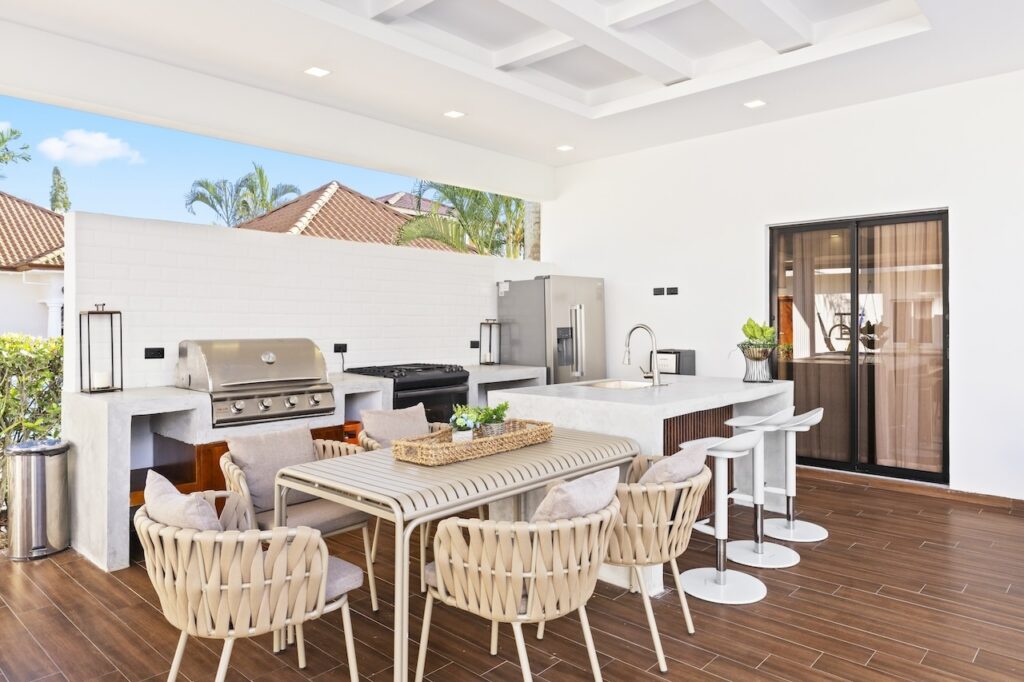
A built-in kitchen is right for you if you want a bigger kitchen that’s connected to the rest of your yard plan. A modular kitchen is better if you want a fast and cheaper build in a house you won’t be staying in forever.
Both options put a grill, counter, and fridge in your backyard and have you searching “covered outdoor kitchen ideas”. What separates them is permanence and cost. So how long do you plan to stay in your home, and how do you actually cook and entertain outside? The answer will help you decide on the best design option. Let’s break down what each one offers.
What “Built-In” Means
A built-in custom outdoor kitchen is a permanent structure. Think of it like adding a room to your house.
- Masonry or steel-framed structure set on a footing or concrete slab, finished in stone, stucco, brick, or tile
- Appliances are dropped into permanent cutouts
- Gas, water, and electrical lines run underground and are hard-plumbed
- Designed as a fixed extension of your home’s architecture
What “Modular” Means
A modular kitchen is built from prefabricated cabinet units, so they’re more like ready-made sections you piece together.
- Grill bay, sink base, fridge cabinet, and storage units assembled on site
- Sits on an existing patio or pad, often without permanent footings
- Units can be rearranged, added to, or removed later
- Ranges from budget steel-frame kits to premium powder-coated aluminum or concrete systems
Cost Comparison
Price is most people’s deciding factor, so here’s how the two stack up.
Upfront Investment
Modular is typically the lower entry point since it skips heavy site work. Built-in carries higher labor, masonry, and site-prep costs because it’s built from the ground up.
What Drives the Number Either Way
Several choices push the price up or down, no matter which route you take:
- The appliance package and how many bays you want
- Countertop material (granite, quartzite, concrete, or marble)
- Utility runs and how far they are from the house
- Site prep, drainage, and whether a slab already exists
- Your covered outdoor kitchen ideas
Long-Term Value
Built-in generally adds more to your home value and appeals to future buyers. Modular can be relocated, which matters a lot if you think you’ll move.
Design and Layout Flexibility
A built-in kitchen offers the most freedom to shape the space:
- Curves, angles, L-shapes, and bar overhangs are all possible
- Finishes can match the house, pool coping, or patio pavers exactly
- Awkward or sloped spaces can be designed around
Modular has its own perks, especially if you like to keep things simple:
- Straight runs and simple L configurations come together fast
- Easy to start with small covered outdoor kitchen ideas and add a bar or fridge cabinet next season
- Layout can be tested and adjusted before you commit
Installation Timeline and Disruption
Modular kitchens can be installed in days once the units arrive. Built-in projects take weeks, since you have to account for footings, block work, cure time, stone, and countertop templating.
Permits, inspections, and gas and electrical work affect both timelines. It’s also worth checking your HOA review process and setback rules early, so surprises don’t stall your project.
Durability in the North Texas Climate
Our summers are no joke. Intense sun fades and wears down lower-grade cabinetry and countertops. Stone and quality masonry hold up well, while cheap kit frames often don’t last. Make sure your covered outdoor kitchen ideas account for that.
Storms, wind, and temperature swings matter too. Freeze events can crack poorly drained plumbing in either build, and hail exposure makes a strong case for a patio cover or arbor over your cooking area.
Maintenance and Repairs
With modular, appliances and whole units can be pulled out and swapped easily. With built-in, replacing an appliance means matching cutout dimensions years down the road, which can be tricky.
Countertop sealing, grease management, and winterizing plumbing apply to both. Bonus tip: whatever design and covered outdoor kitchen idea you choose, insist on access panels; they make future repairs far simpler.
Which One Fits Your Situation
Still on the fence? Here’s a quick gut check based on your lifestyle.
Choose Built-In If
- This is your long-term home
- You want the kitchen tied into a pool, patio cover, or larger hardscape plan
- You entertain often and need prep space, a bar, or multiple cook stations
Choose Modular If
- You want a working custom outdoor kitchen this season
- Your budget is fixed, or you’d rather phase the project over time
- You may move, or you’re not settled on the final layout
Hybrid Approach
Can’t decide? Set modular units into a permanent covered structure with hard-run utilities. This covered outdoor kitchen idea means you get the flexibility of swappable cabinets with the polish and stability of a fixed build.
How the Kitchen Should Fit the Rest of the Backyard
Your kitchen shouldn’t feel like an island. Keep these in mind:
- Traffic flow between the house, kitchen, dining area, and pool
- Prevailing wind and smoke direction relative to your seating
- A patio cover, arbor, or pergola over the cook zone
- Lighting, outlets, and task lighting at the grill and prep counter
- Planning the kitchen alongside pool or hardscape work saves money on shared utility trenching
Frequently Asked Questions
Q: Is a modular outdoor kitchen cheaper than built-in?
Usually yes, upfront. That said, a high-end modular system with premium appliances can match the price of a modest built-in.
Q: Do modular outdoor kitchens last as long as built-in?
A: Quality varies widely. Premium aluminum or concrete systems hold up well, while entry-level steel kits often don’t.
Q: Can I move a built-in custom outdoor kitchen?
A: No, it’s a permanent structure. That’s part of the tradeoff you accept for its durability and value.
Q: Does an outdoor kitchen add value to a home?
A: Built-in kitchens tied into a finished outdoor living space tend to have the strongest appeal to buyers.
Q: Do I need a permit for a custom outdoor kitchen?
A: Requirements vary by city. Gas, electrical, and plumbing work typically trigger the need for permits.
Q: Can I start modular and upgrade to built-in later?
A: Yes. Running utilities and pouring the pad correctly the first time makes that transition much easier down the road.
Let’s Design a Backyard You’ll Actually Use
Whichever direction fits your home, Outdoor Living Pool & Patio can help you plan your covered outdoor kitchen idea right. We design custom outdoor kitchens, patio covers, and arbors around how North Texas homeowners really use their backyards. You’ll get a space built to last through our summers and beyond. Reach out today for a free consultation.
